
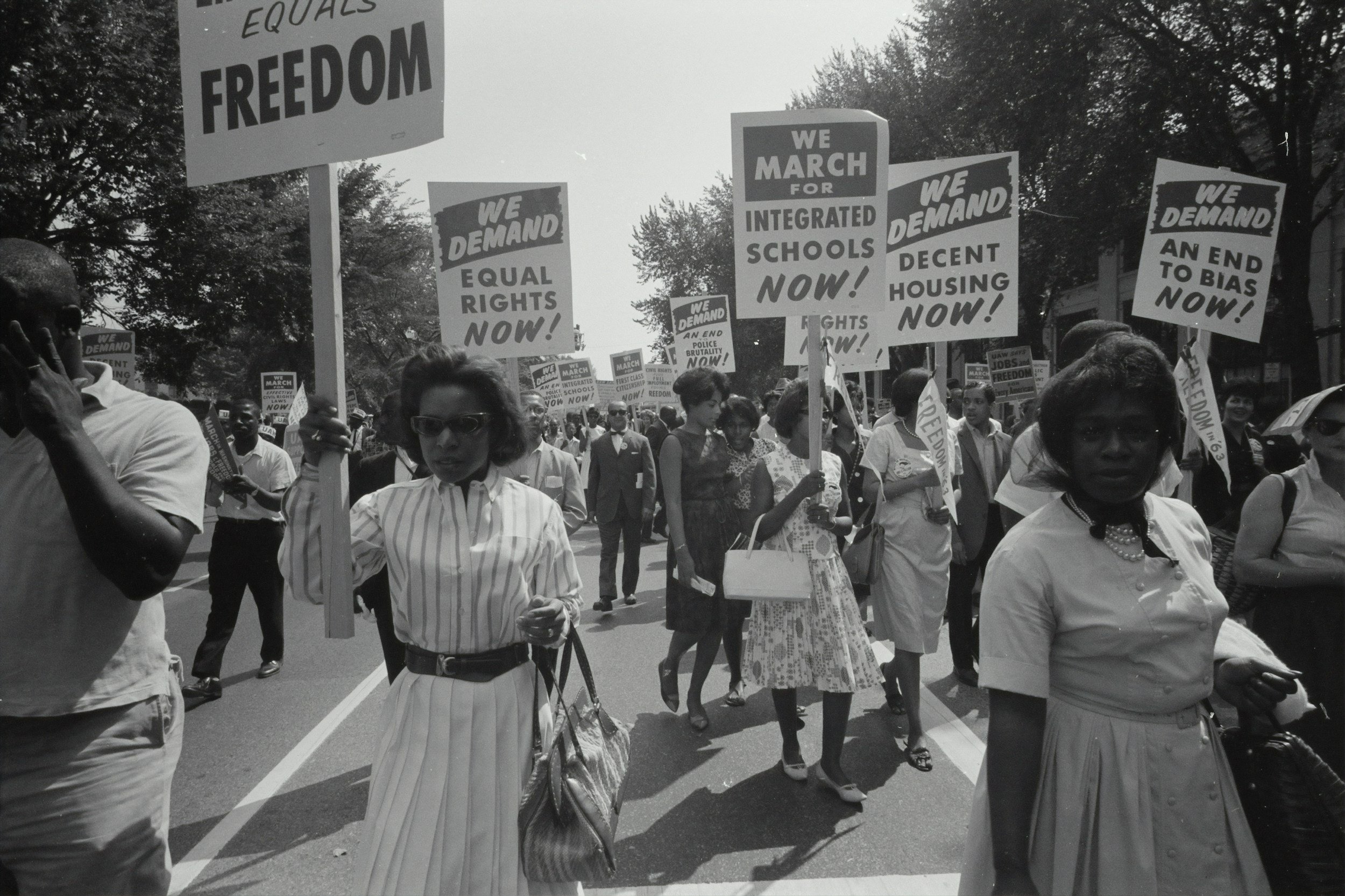
Photo by Warren K. Leffler in (Library of Congress) via Unsplash
CONFERENCE: Catholic Theological Society of America
PANEL: Historical Theology II Topic Session
TIME: June 12, 2:45-4:30 p.m. (CST)
WHERE: Mills 7, Hyatt Regency St. Louis at the Arch (St. Louis, MO)
Abstract
Mark your calendar and conference program for this upcoming paper. In the meantime, you can connect with the author on socials and view the paper précis below.
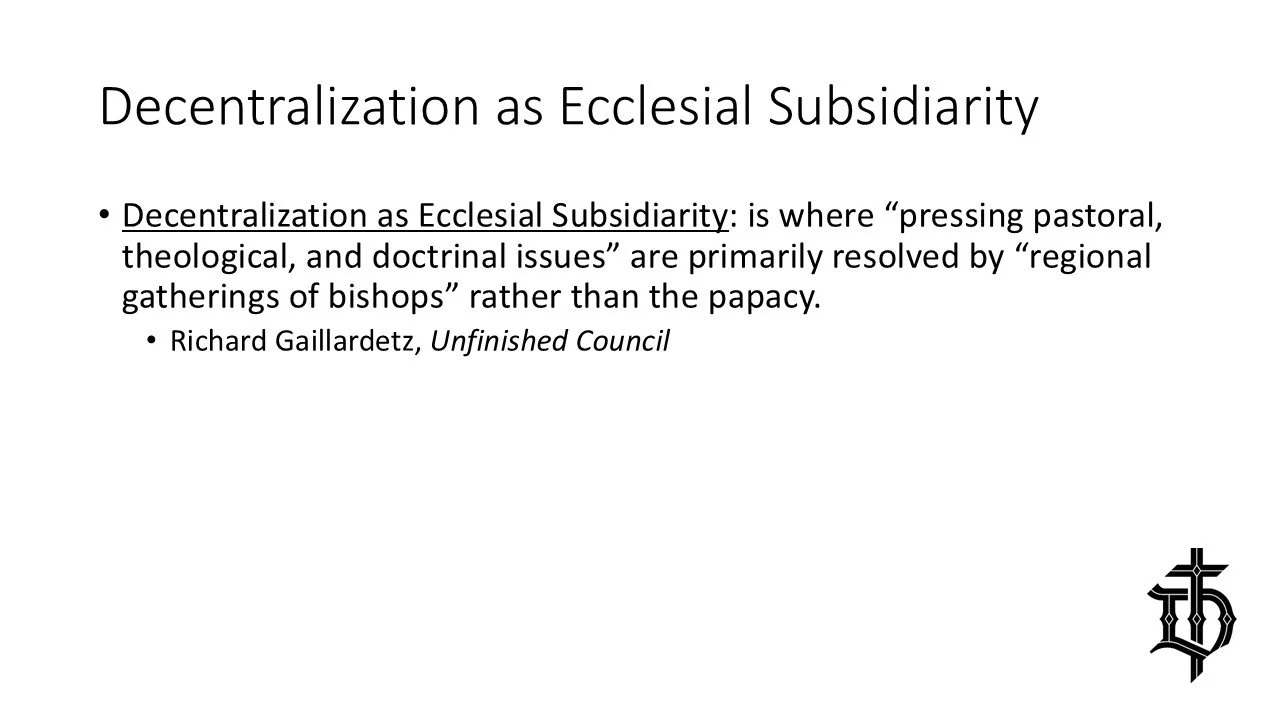
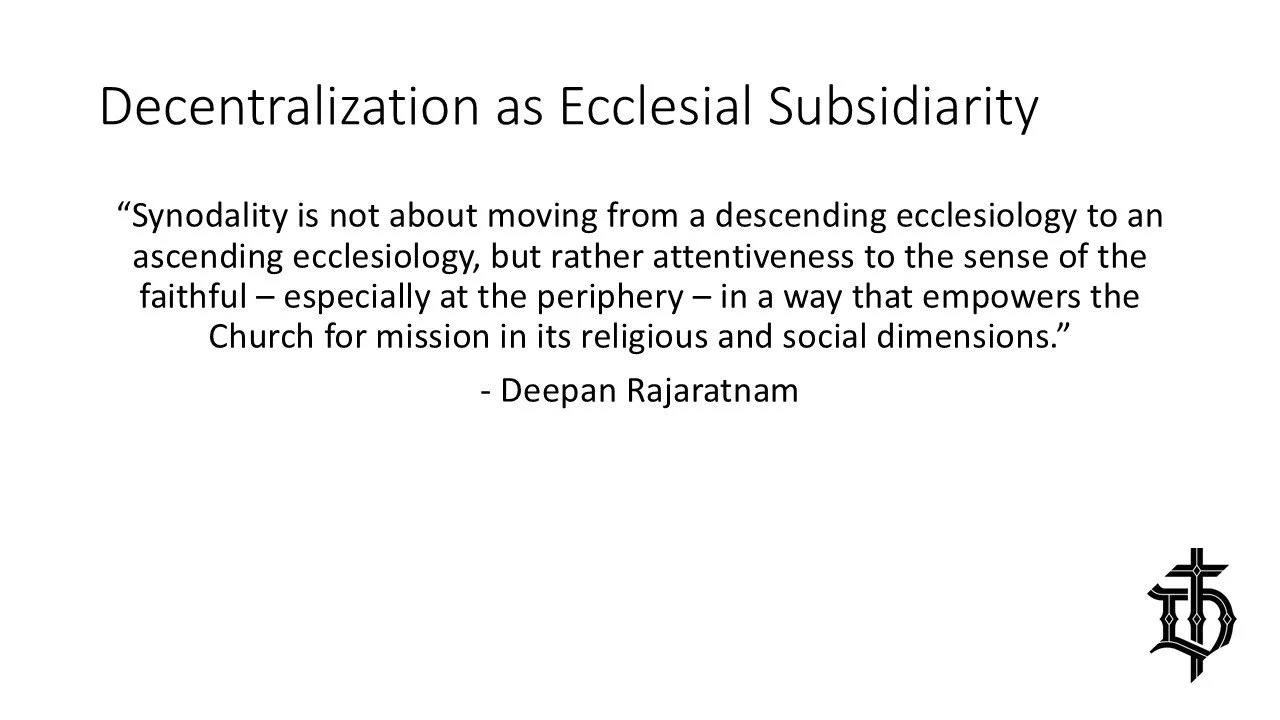
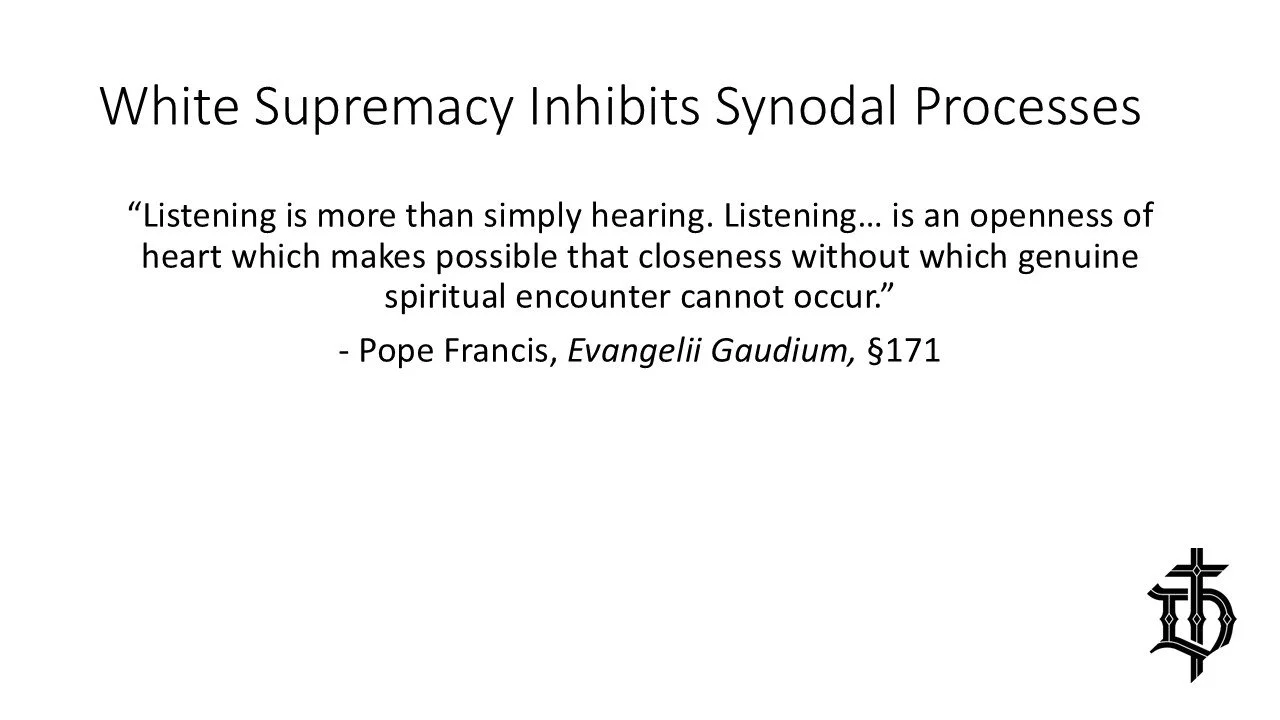
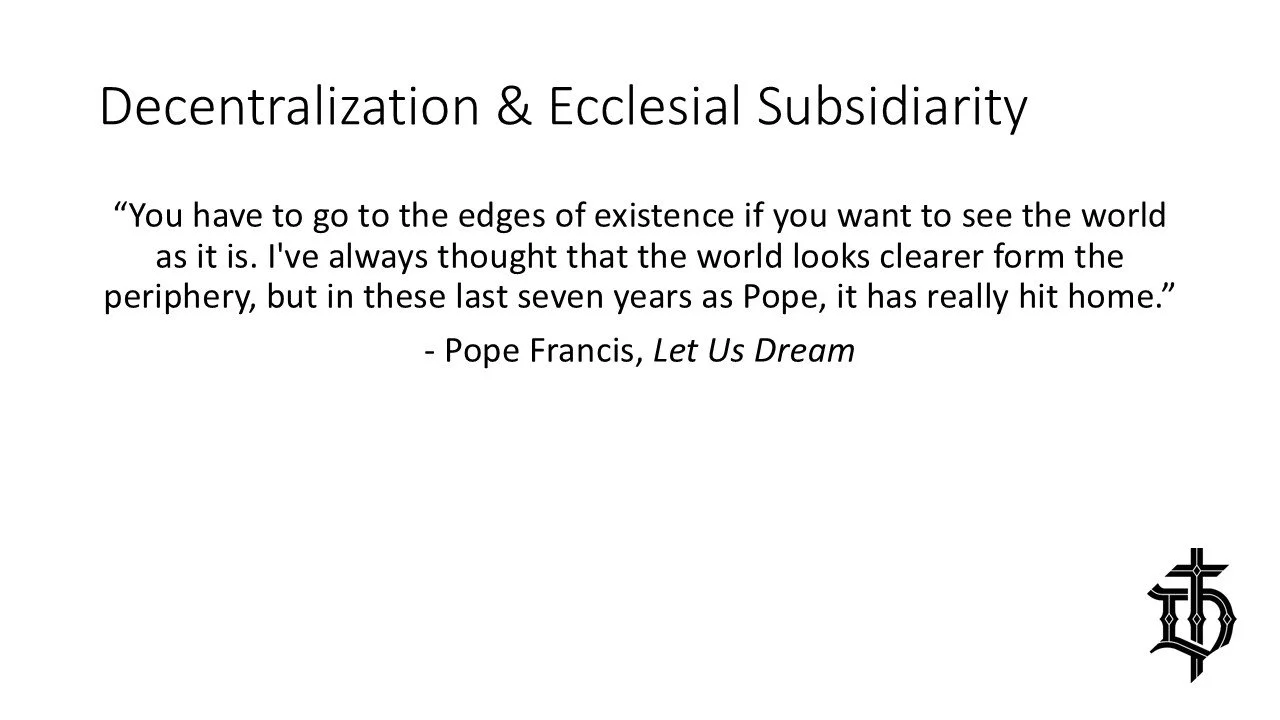
As synodal reform unfolds, some ecclesiologists have advanced Pope Francis’ call for “a sound ‘decentralization’” through the principle of ecclesial subsidiarity. Problematically, this approach ignores the U.S. church’s historical inability to attend to the sensus fidei of the periphery especially in the context of white supremacy. Mining the U.S. church’s history of national and local synods, I demonstrate the limitations of ecclesial subsidiarity in the context of white supremacy. Instead, I propose synodal reform proceed along two complementary paths – ongoing decentralization and synodal centralization – that would hold synodal bodies accountable to the sensus fidei of the periphery amid white supremacy.
INTRODUCTION
Slide 1
Slide 2
Slide 3
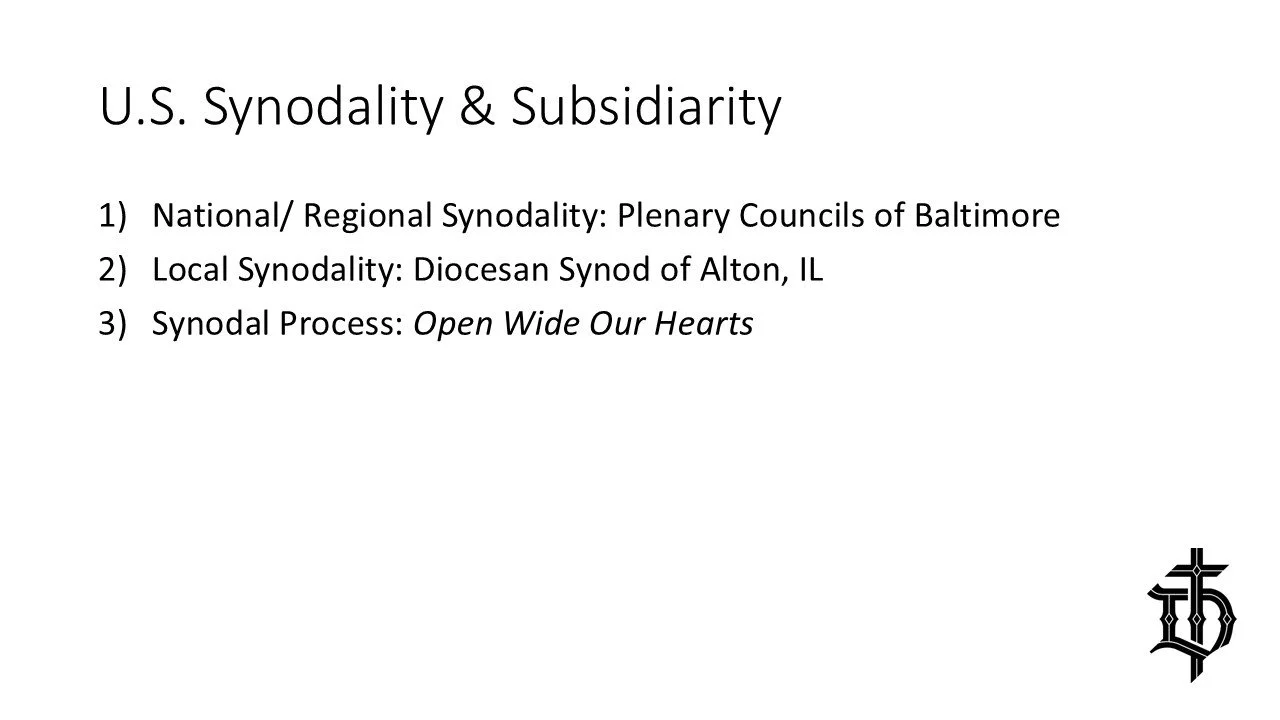
NATIONAL SYNODALITY IN THE CONTEXT OF WHITE SUPREMACY:
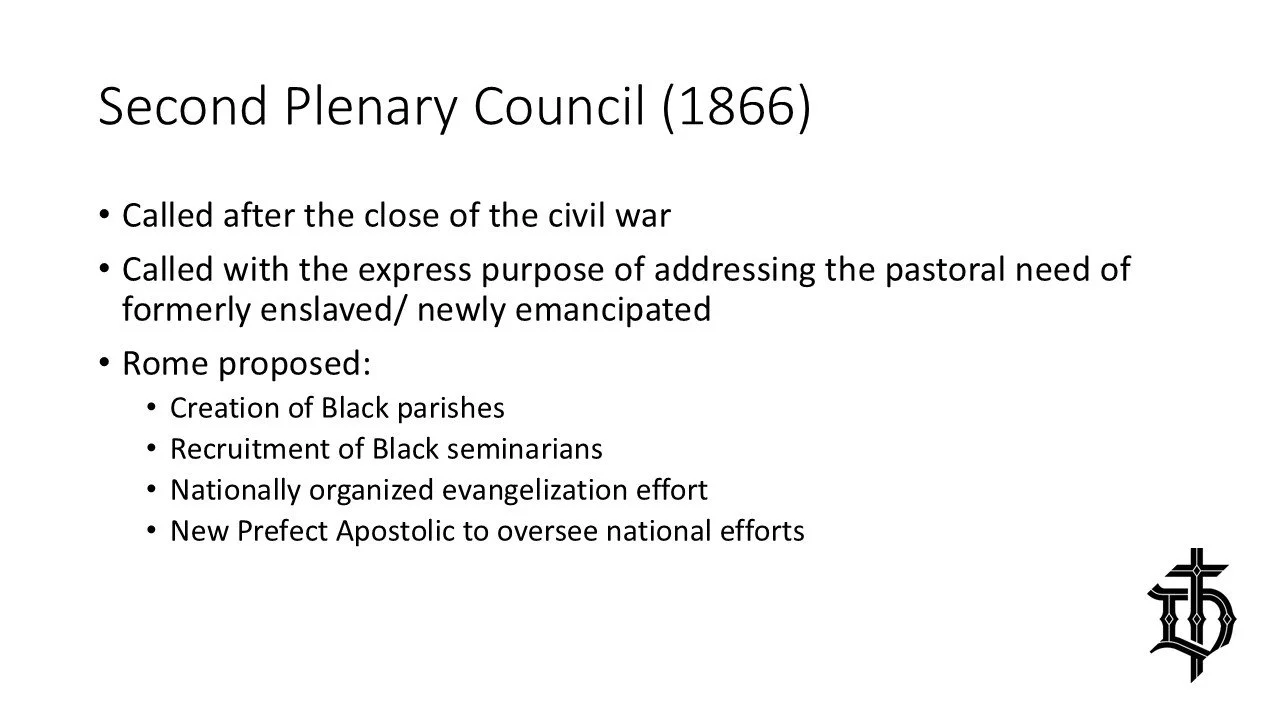
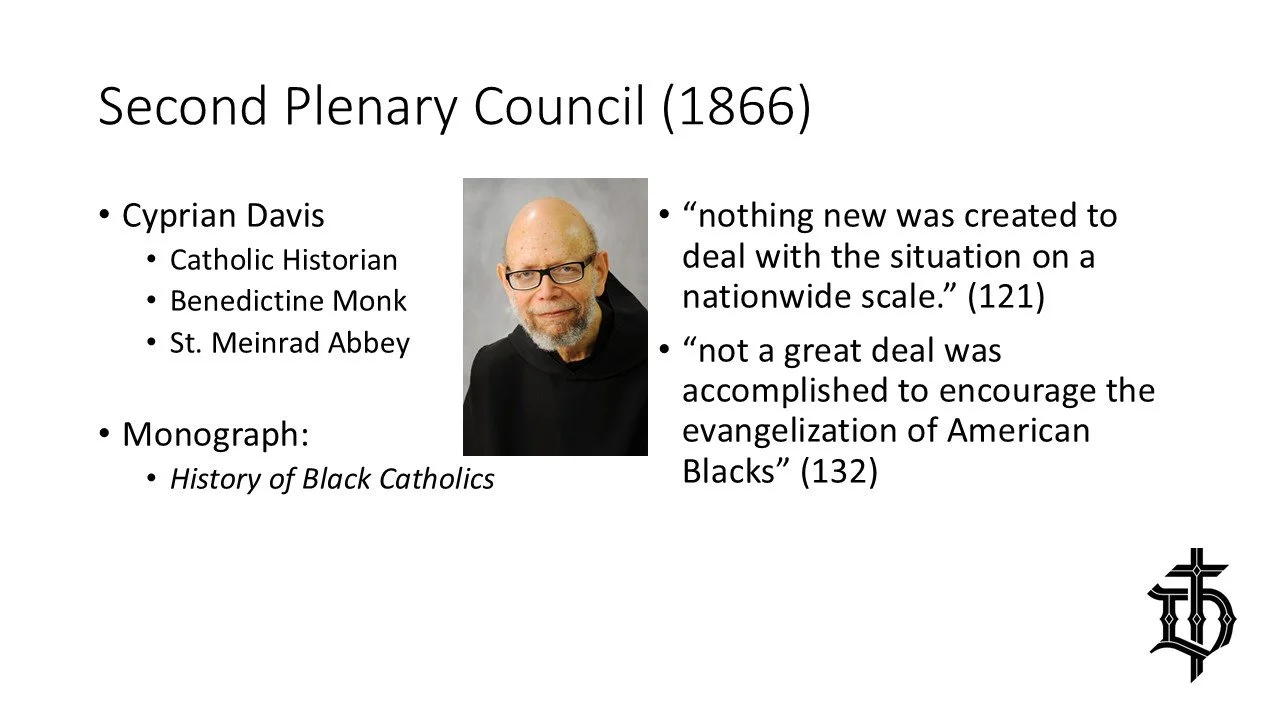
Second Plenary Council of Baltimore (1866)
Slide 4
Slide 5
LOCAL SYNODALITY IN THE CONTEXT OF WHITE SUPREMACY:
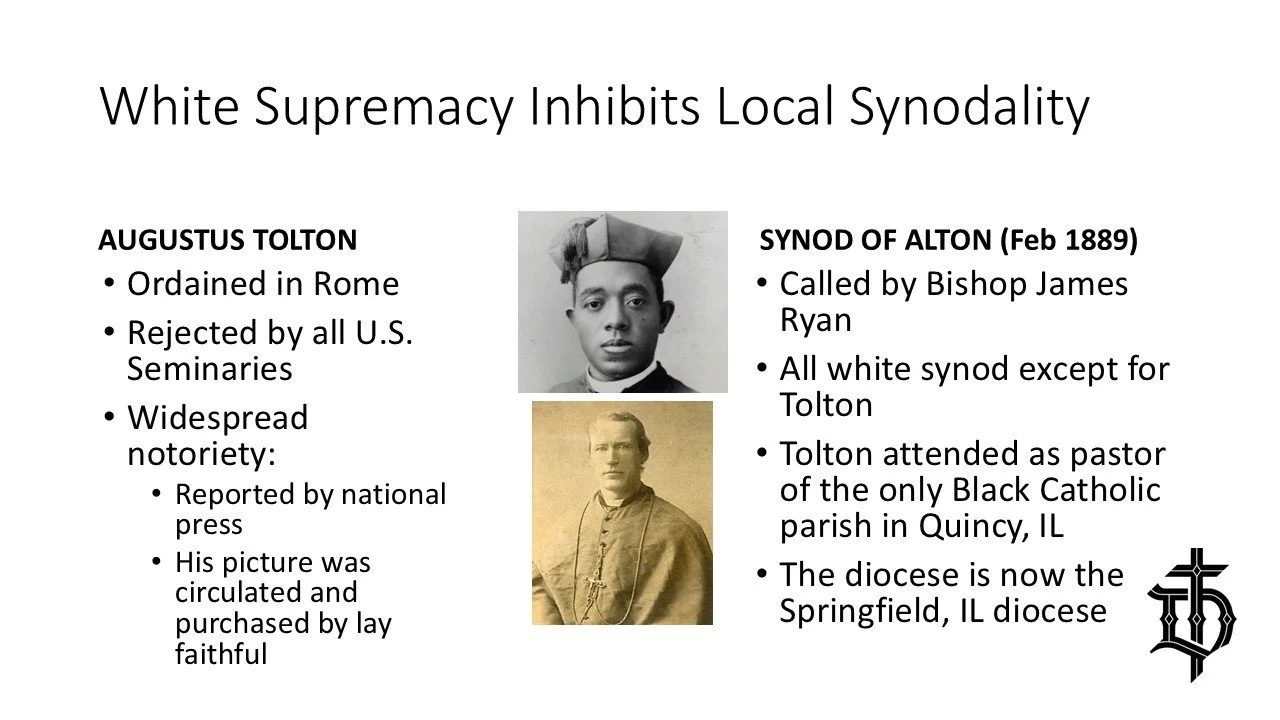
Augustus Tolton & the Synod of Alton (Springfield, IL)
Slide 6
SYNODAL PROCESS IN THE CONTEXT OF WHITE SUPREMACY
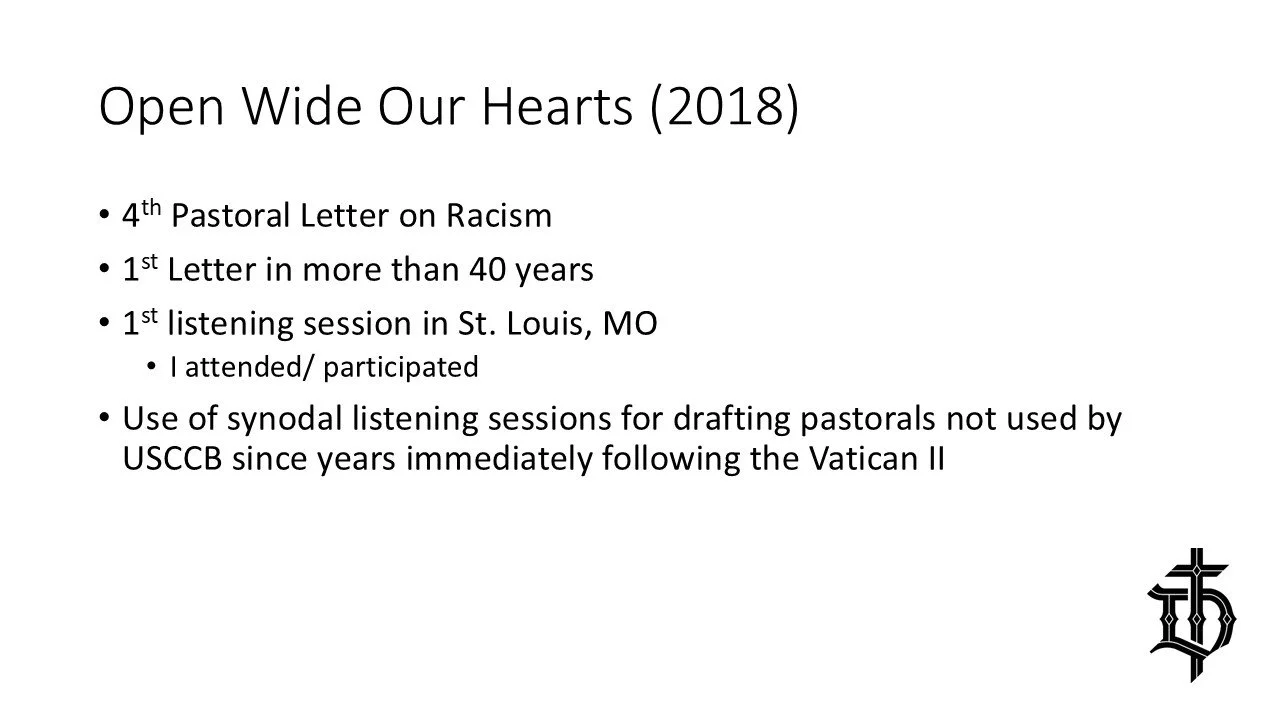
The U.S. Bishops and their Pastoral Letter on Racism
Slide 7
Slide 8
PRIMACY IN THE CONTEXT OF WHITE SUPREMACY
The Insufficiency of Ecclesial Subsidiarity
Slide 9
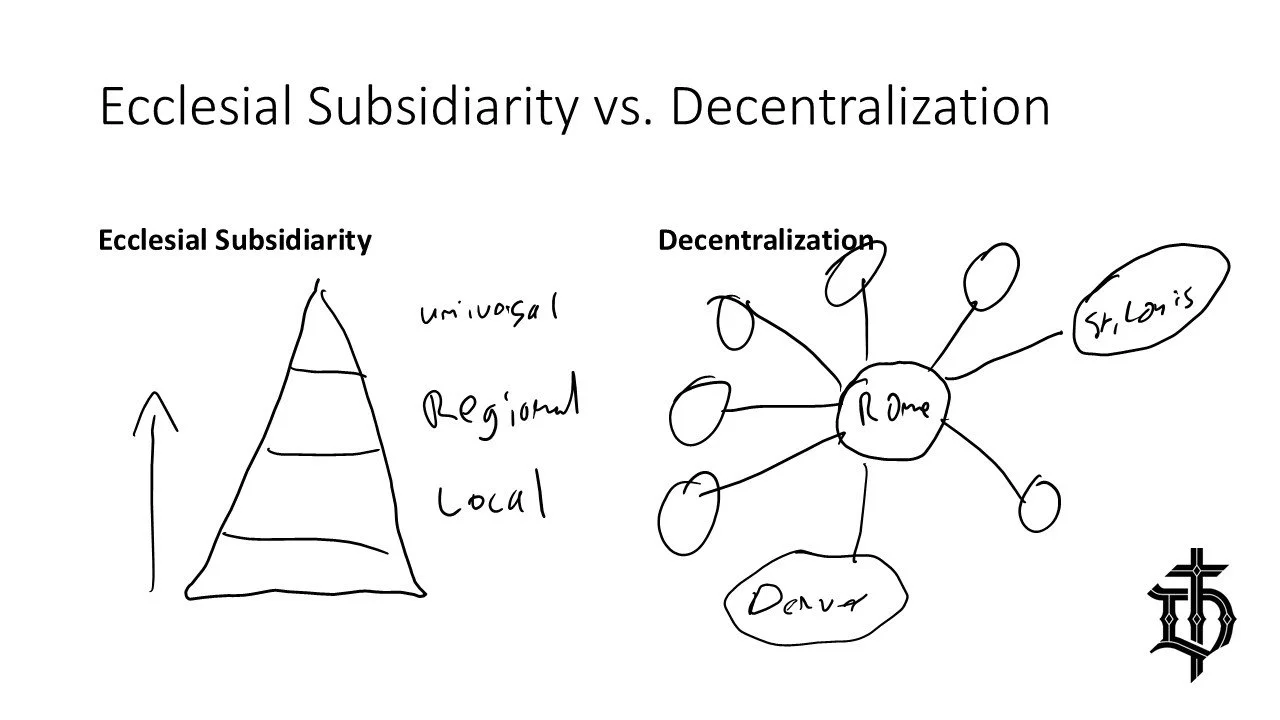
(I am a poor artist…)
Slide 10
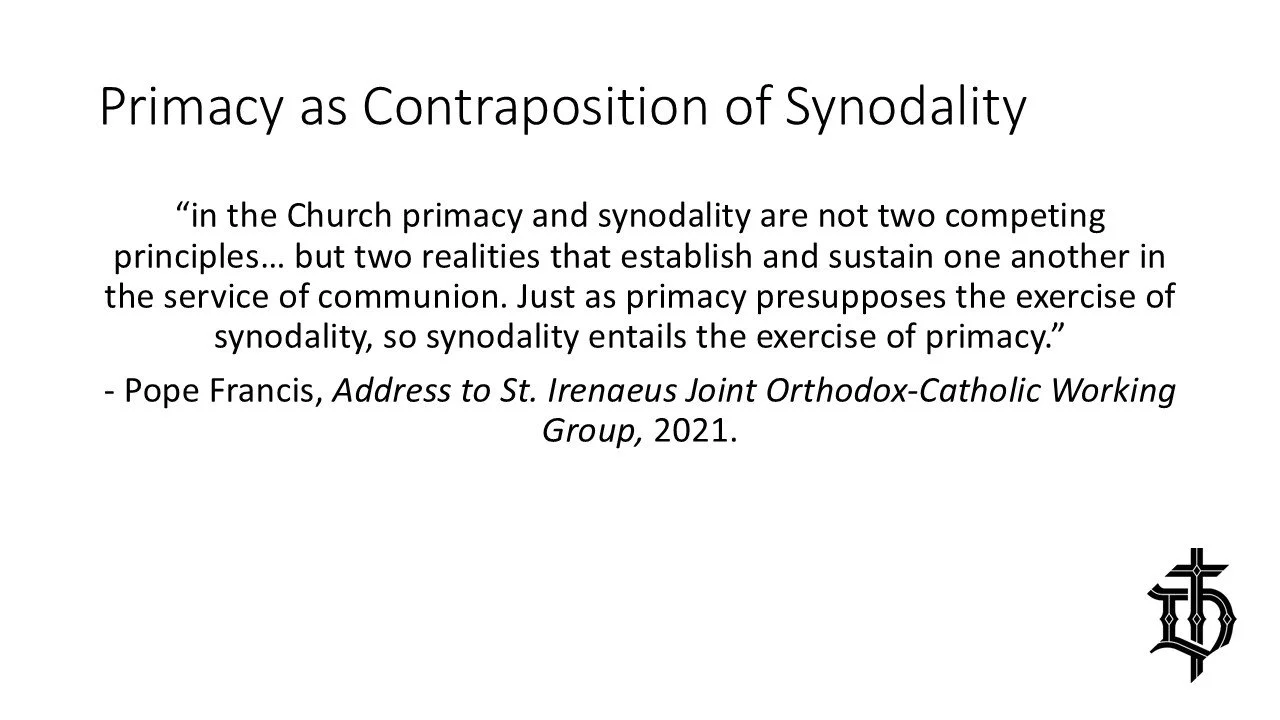
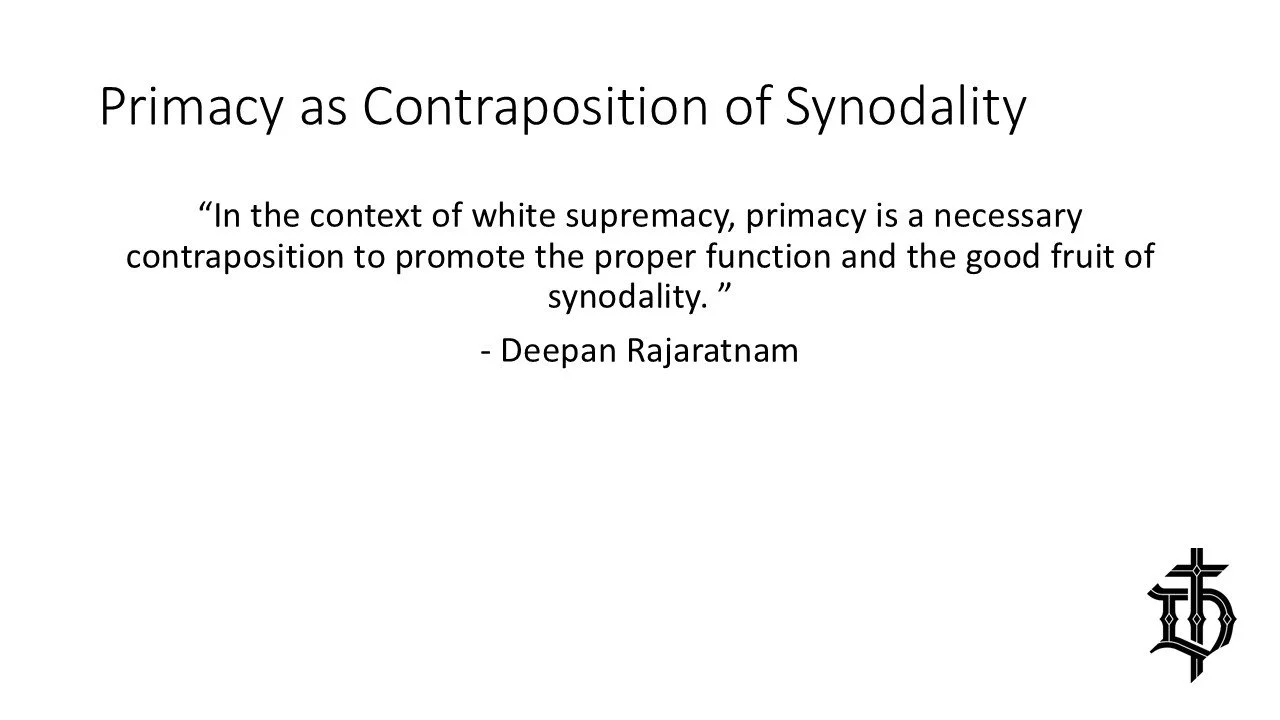
Slide 11
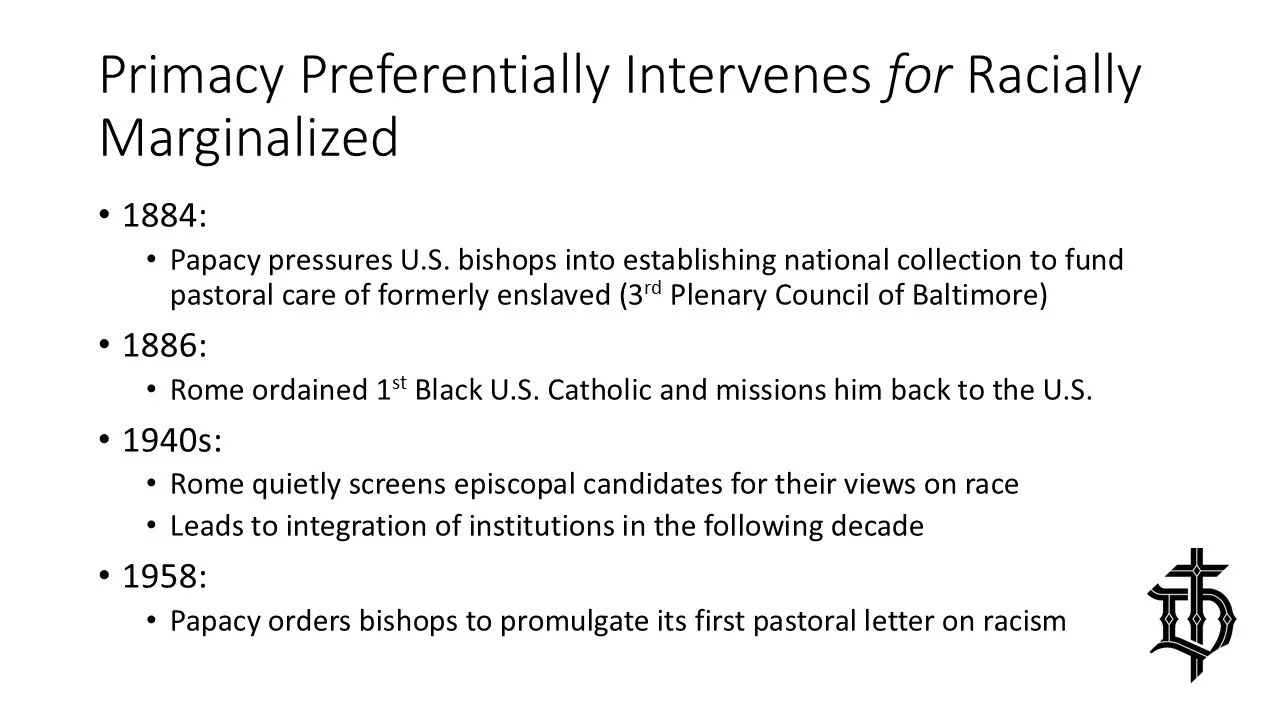
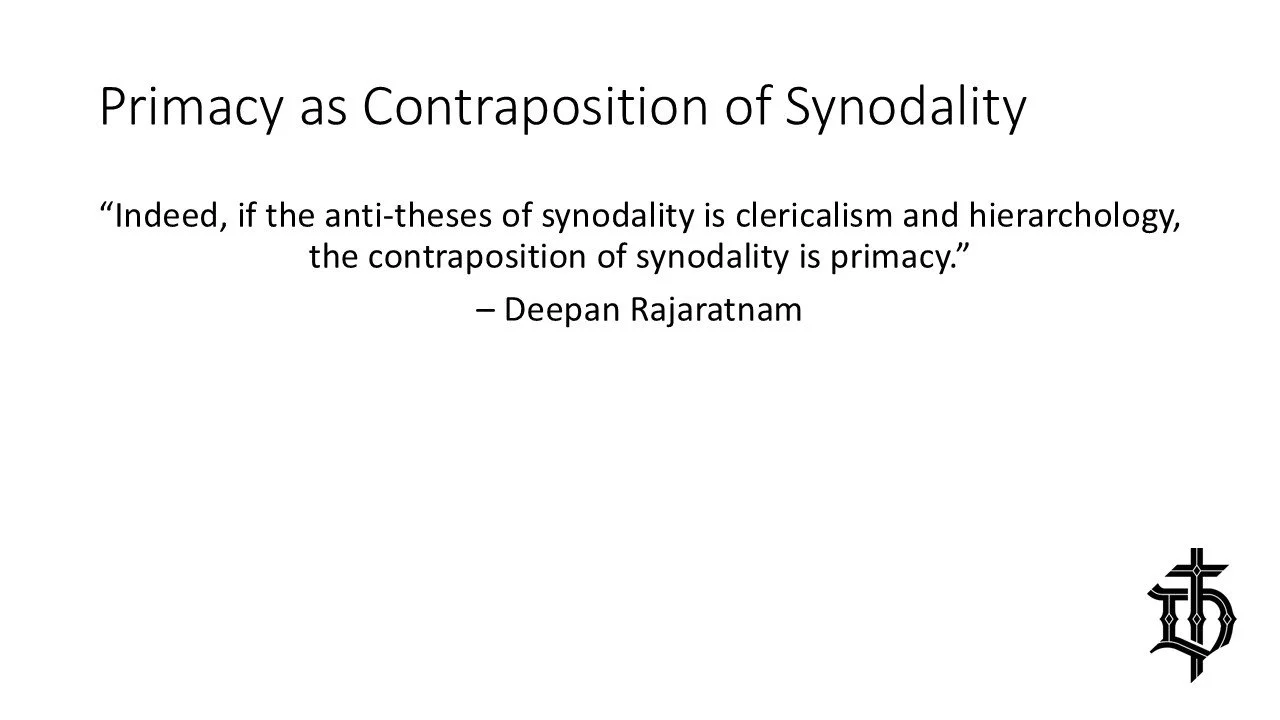
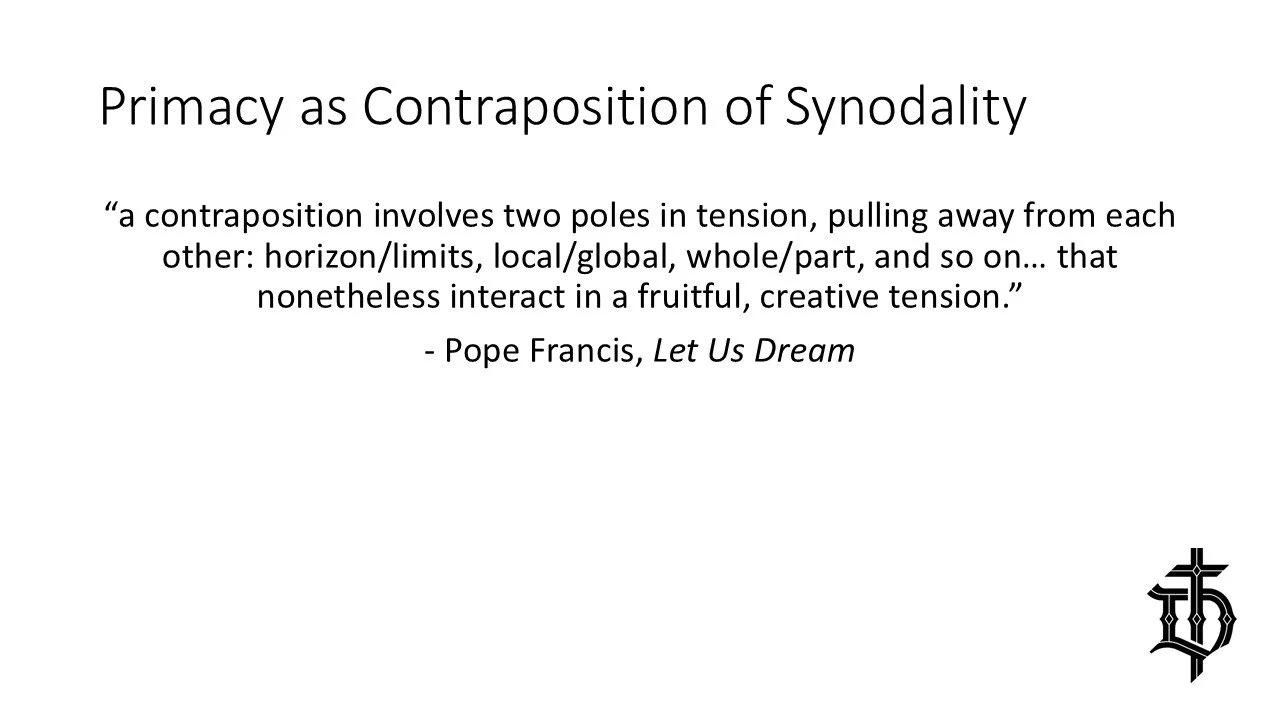
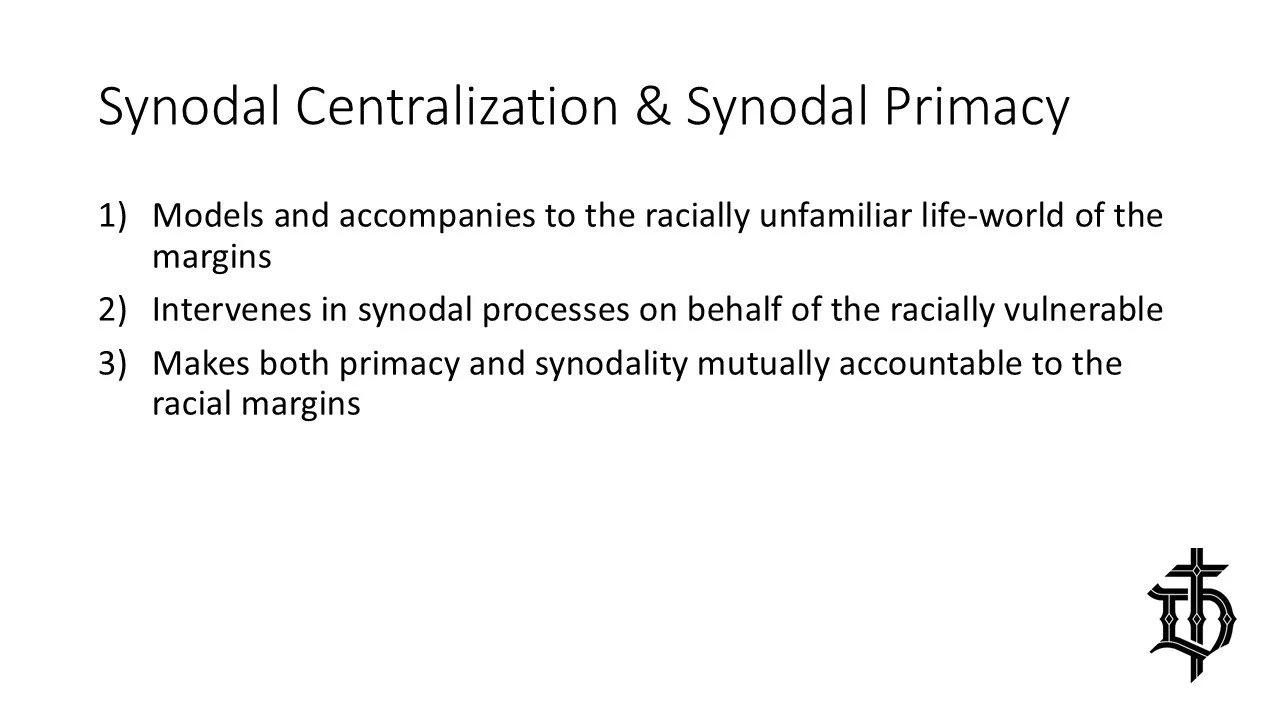
Synodal Centralization and Synodal Primacy
Slide 12
Slide 13
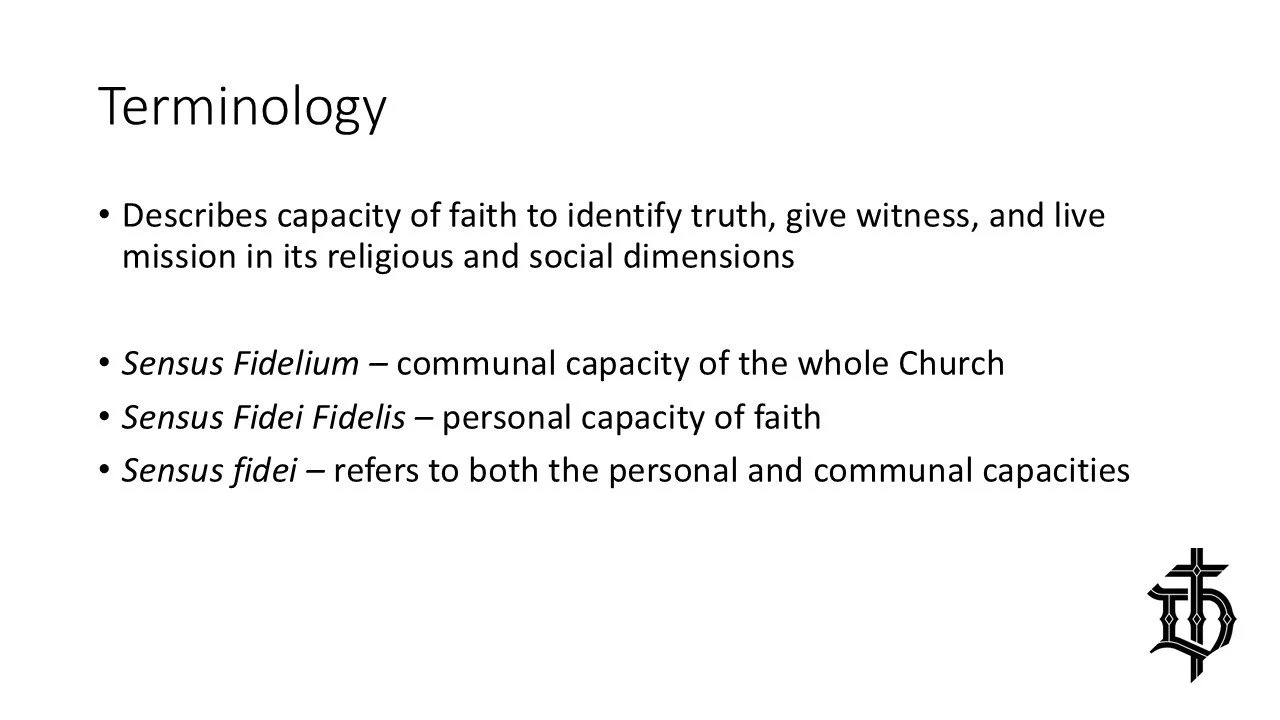
Appendix: definition of terms
Let’s Connect!